|
In 1939, the Electro-Motive Corporation completed a revolutionary railroad locomotive powered by a diesel prime mover and using an electric transmission. While this combination had been used for years in some switching and passenger locomotives, EMC was determined that their new locomotive, the FT, would replace steam locomotives in freight service. Western Pacific was an eager early buyer of this model and later its improved successors. F3 and later FP7 models were acquired for the California Zephyr, while the F7 model helped retire many of the railroad's steam engines in freight service.
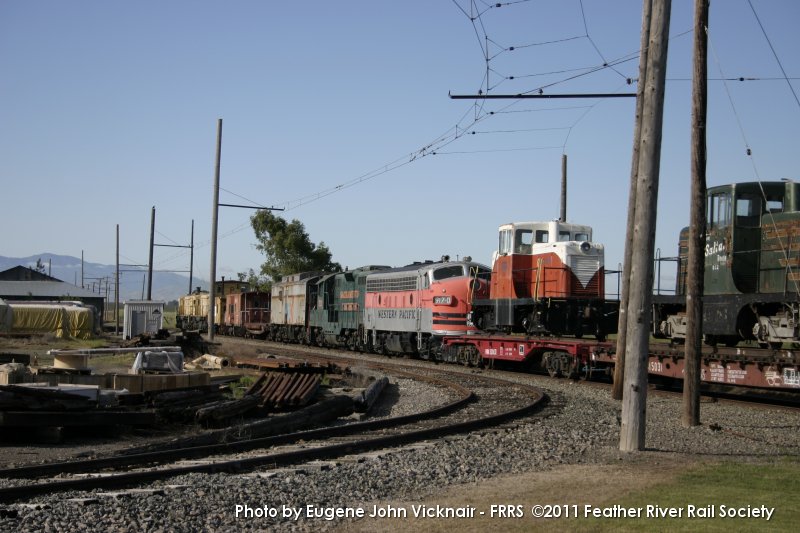
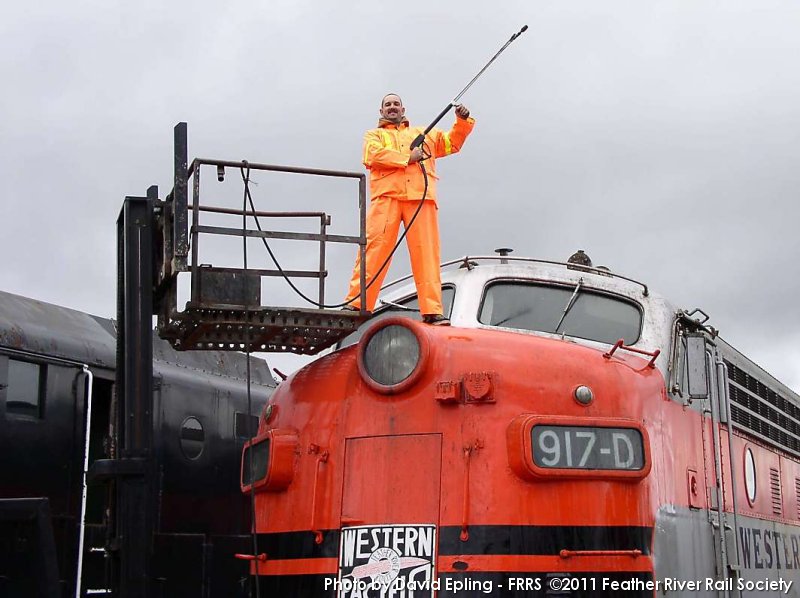
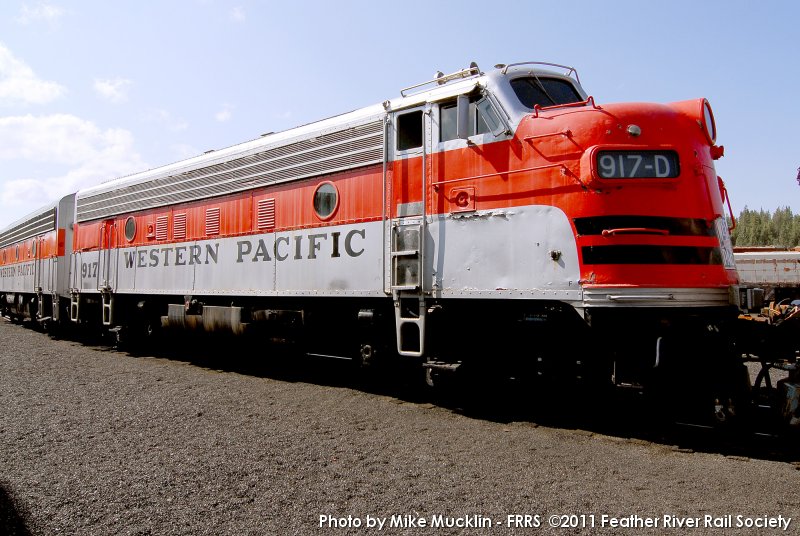
WP 917-D was delivered in WP's first order for the F7 model as part of an A-B-B-A set, costing the railroad $653,408. For comparison, a single General Electric Locomotive can now be ordered with the same 6,000 horsepower as this 4 unit set of F7's, but at a cost of $2.5 Million per copy. These carbody type locomotives served until newer models with higher horsepower and better visibility rendered them obsolete. The WP, however, was slow to retire them, the railroad always being too short of money to completely replace those older locomotives which could still earn a profit. By 1977, when most railroads had long since replaced their full carbody style locomotives, the WP still rostered four. That year, two of the survivors, the 913-A (preserved in Sacramento at the California State Railroad Museum) 921-D, were sent to Morrison-Knudsen in Boise, ID for rebuilding, while one of the others was rebuilt by WP in Stockton. The 913, was repainted into a new version of the classic orange and silver Zephyr paint by the Stockton paint shop, at the urging of several WP employees who mounted a letter writing campaign, while the other three, including WP 921-D and 917-D, both here in Portola, were given WP's then standard green and orange colors. For the next three years, the newly christened "Fab 4" continued to earn their keep while generating great publicity for the WP. These 4 engines were regulars on the Stockton-San Jose auto trains, gaining a cult following of railroad fans, making these 4 locomotives some of the most photographed of all time.
After the Union Pacific merger, the 921-D was retired and donated to the brand new FRRS by UP President Mike Flannery during the opening ceremonies of the new "Portola Railroad Museum" (Now the Western Pacific Railroad Museum). Sister 917-D came to the museum in 2005 as part of a trade with the Bay Area Electric Railway Association at Rio Vista Junction.
|
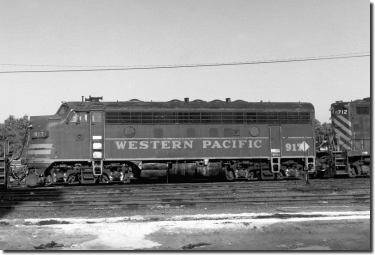
Western Pacific 917-D (by now, simply renumbered 917 as alphabetical suffixes were incompatible with WP's computerized tracing system) has just arrived at Stockton in 1981 after yet another round trip to San Jose ferrying auto's and auto parts from Ford in Milpitas. The 917, 918 and 921 were repainted in the WP's 1970's standard "Perlman" green and orange paint. By this point the venerable old engines had each traveled nearly 2 million miles and were still going strong.
|
 TrainLife.com
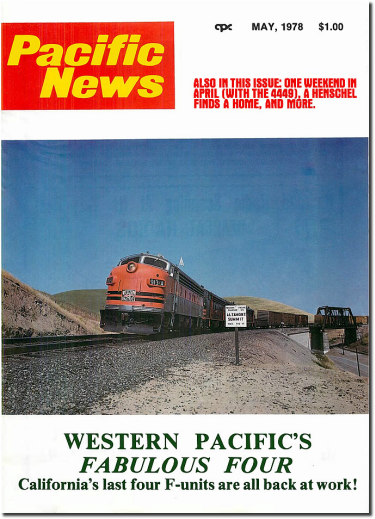
Western Pacific′s "Fab-4" F7's were the subject of several articles in the rail press. an article by Ken Meeker on the WP's venerable fleet of F7's on the "San Jose Turn" in the May 1978 issue of "Pacific Rail News", courtesy of trainlife.com.
TrainLife.com
Western Pacific′s "Fab-4" F7's were the subject of several articles in the rail press. an article by Ken Meeker on the WP's venerable fleet of F7's on the "San Jose Turn" in the May 1978 issue of "Pacific Rail News", courtesy of trainlife.com.
|